


The stock market is poised to finish the year with double-digit gains for the sixth time in seven years. This impressive run, broken only by 2022's inflation-driven decline, has positioned many investors favorably heading into the new year.
There's truth to the saying that anticipation can be more powerful than reality itself. While strong portfolio returns are undeniably beneficial for financial objectives, they often bring nervousness once achieved. This is particularly relevant as market gains have extended beyond technology stocks focused on artificial intelligence, with international equities recovering and bonds providing steady support. Yet with major indexes hovering near record highs and valuation metrics approaching levels last seen during the dot-com era, investor anxiety persists.
Throughout 2025, several pivotal shifts occurred across key economic issues. Inflation has settled around 3%, continuing to affect household budgets but showing stability. Trade tariffs, though elevated historically and a source of market volatility this year, haven't triggered the economic disruptions many anticipated. The Federal Reserve has maintained its rate-cutting trajectory while economic expansion has proceeded at a solid pace.
Taking a broader view, one of the most valuable insights heading into the new year is recognizing that worst-case scenarios rarely unfold as feared. The recession widely anticipated since 2022 never arrived. Historical patterns reveal that genuine market disruptions—such as the 2020 pandemic or 2008 financial crisis—are far outnumbered by feared catastrophic events that never happen. The real challenge for investors with long time horizons isn't forecasting which risks will prove significant, but rather maintaining steady perspective and portfolio discipline regardless of market conditions.
Looking toward 2026, the investment environment offers both promise and complexity. Expected headlines will likely cover the midterm elections, Federal Reserve leadership transition, artificial intelligence developments, lending market concerns, dollar movements, and more. Success won't come from predicting every market twist, but from ensuring portfolios can withstand uncertainty while capturing long-term appreciation. Below are seven essential themes to consider when approaching the year ahead.
Multiple asset classes are strengthening portfolios heading into 2026
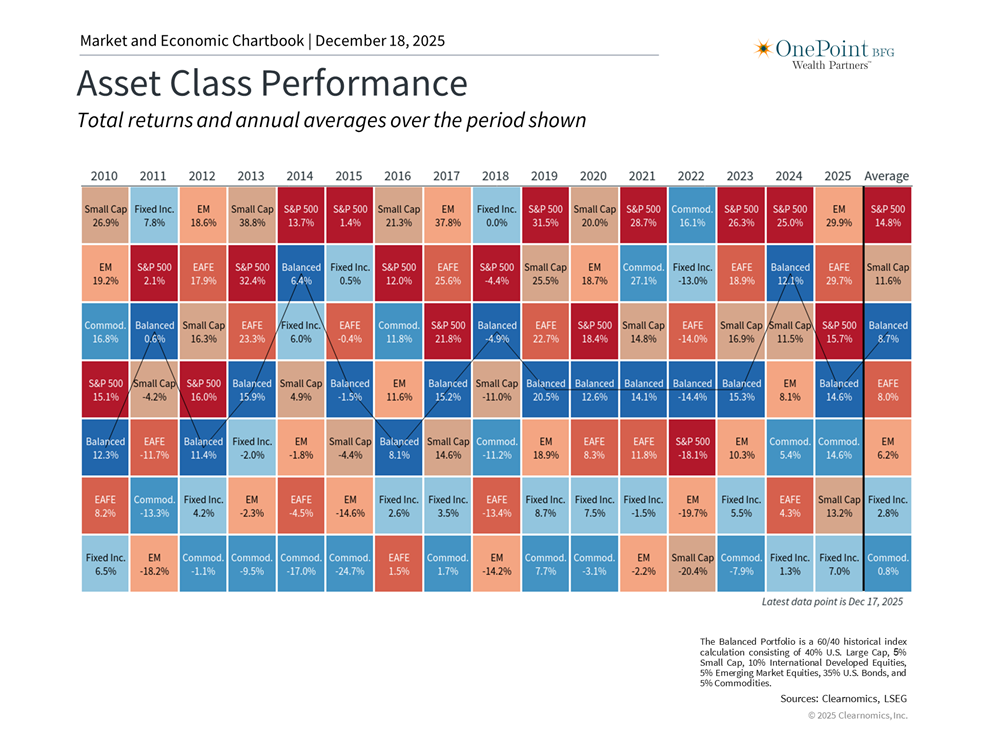
A notable development as we approach 2026 is the broad-based contribution to portfolio performance across multiple asset classes. This marks a shift from much of the previous decade when U.S. equities dominated global markets. Throughout 2025, international stocks have outperformed domestic markets, with developed market equities (MSCI EAFE) and emerging market equities (MSCI EM) each delivering approximately 30% returns in dollar terms. Two primary factors have driven this performance: strengthening growth projections across various economies and dollar weakness, which enhances returns for dollar-based investors.
Bonds have also resumed their traditional stabilizing function within portfolios. The Bloomberg U.S. Aggregate Bond Index has advanced 7% year-to-date as the Federal Reserve continues reducing rates and inflation moderates. High-quality fixed income has fulfilled its intended purpose by generating income and cushioning equity volatility during uncertain market periods.
Looking ahead, these trends reinforce the value of maintaining balanced, diversified portfolios. While headline-driven portfolio adjustments may seem tempting, investors who remain committed to their long-term financial strategies are well-positioned for continued success.
Valuation levels are nearing dot-com era peaks
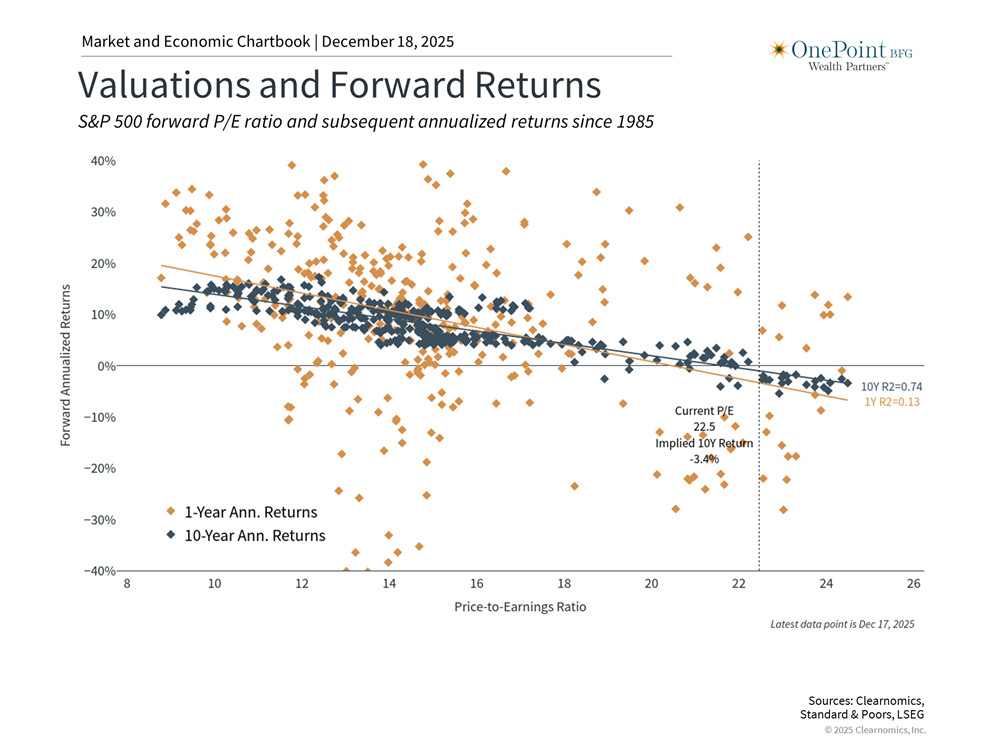
Strong multi-year returns have pushed stock valuations progressively higher. The S&P 500 currently trades at a price-to-earnings multiple of 22.5x, nearing the historical peak of 24.5x reached during the dot-com bubble. This indicates investors are accepting higher prices for each dollar of anticipated future earnings compared to recent years.
Valuation concerns typically arise when pricing becomes detached from fundamental business performance. During the dot-com bubble, for instance, valuations reached unprecedented levels that significantly exceeded revenue and earnings growth, as investors bid up any company associated with the "new economy." Today's elevated valuations reflect enthusiasm surrounding AI and sustained economic expansion, but corporate fundamentals remain robust. Earnings growth has been healthy, with consensus estimates from LSEG suggesting continued expansion potential.
Understanding what valuations signal—and what they don't—is crucial. High valuations don't necessarily forecast immediate corrections, as markets can sustain expensive levels for considerable periods. While concerns about an "AI bubble" persist, not every bubble ends in dramatic collapse. Some deflate gradually as fundamentals gradually justify elevated prices. This represents a key distinction between the dot-com crash of the late 1990s and early 2000s and the steady evolution of cloud computing over the past decade.
That said, elevated valuations do imply potentially more moderate future returns, as current prices already incorporate expectations for future growth. They also heighten market sensitivity to disappointments. Investors frequently describe such environments as "priced for perfection," where even modest earnings misses or economic data shortfalls can trigger volatility. This reality makes selectivity and maintaining balanced exposure across various market segments—including different asset classes, sectors, company sizes, investment styles, and more—increasingly important.
Artificial intelligence continues shaping economic expansion and market performance
No trend has dominated investor focus quite like artificial intelligence. Capital spending on AI infrastructure reached remarkable heights in 2025, with aggregate investment easily surpassing trillions of dollars. This encompasses new data center construction, equipment purchases including GPUs, and expanding AI research capabilities.
Some investments involve seemingly circular arrangements. For instance, Nvidia committed up to $100 billion to OpenAI, which subsequently purchases millions of Nvidia chips. These interrelated transactions have sparked questions about whether the AI ecosystem can maintain momentum if enthusiasm diminishes.
These patterns highlight that AI infrastructure demands resources few companies can independently finance. The critical question is whether this technology will ultimately produce sufficient value to warrant the massive expenditures. Currently, AI investment represents a substantial portion of overall economic activity.
Survey data indicates businesses are progressively integrating AI into operations. The Census Bureau's Business Trend and Outlook Survey shows the percentage of businesses reporting AI usage more than doubled from 4% in September 2023 to 10% in September 2025. Similarly, the share anticipating AI adoption within six months increased from 6% to 14% during this period.1
While these figures have jumped significantly, substantial room for growth remains.
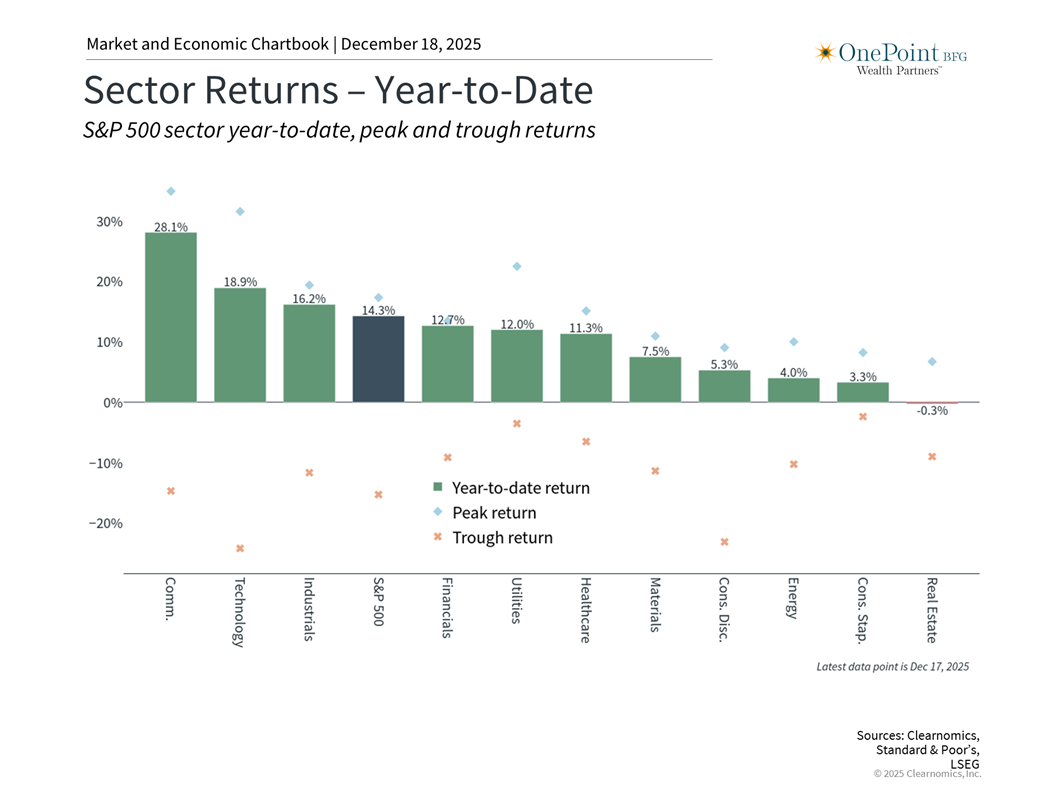
For investors, AI presents both opportunity and risk. The Magnificent 7 technology companies continue driving market gains through infrastructure investments and expanding AI adoption. However, this concentration creates vulnerability. These companies now comprise roughly one-third of the S&P 500, meaning most investors carry significant exposure whether they recognize it or not.
The question isn't whether AI will reshape the economy—that seems certain. Rather, it's whether current prices adequately reflect realistic timeframes for returns on these enormous investments. Historical precedents from the 1860s railroad expansion to the 1990s dot-com revolution show transformative technologies typically follow similar trajectories: initial doubt, rapid adoption, market excitement, and eventual economic integration.
The critical lesson is that markets frequently overestimate how quickly profits materialize. Most investors likely hold AI exposure either directly or through major indexes, making awareness of this concentration essential. Maintaining appropriate asset allocation aligned with long-term objectives will be vital in the coming year.
Economic expansion is moderating but remains constructive
Economic growth has decelerated from peak levels but continues exceeding many pessimistic forecasts. U.S. GDP experienced a modest contraction during the first quarter of 2025, though this quickly reversed as tariff uncertainty subsided. The second quarter's 3.8% growth rate not only surpassed expectations but ranks among the strongest quarterly performances in years.
Regarding global GDP, the International Monetary Fund forecasts a slight moderation from 3.2% in 2024 to 3.1% in 2026. Advanced economies are projected to expand around 1.5%, while emerging markets are expected to sustain growth exceeding 4%.2
Despite aggregate growth, economic expansion has varied considerably across income levels and industries. This phenomenon is commonly described as a "two-speed" or "K-shaped" economy, where some segments flourish while others face challenges.
Today's economic divergence stems primarily from technology trends, as those positioned to capitalize on AI advancement may enjoy better employment prospects than those in traditional sectors. Beyond AI, factors including consumer debt burdens and auto loan delinquencies influence whether individuals benefit from overall economic growth.
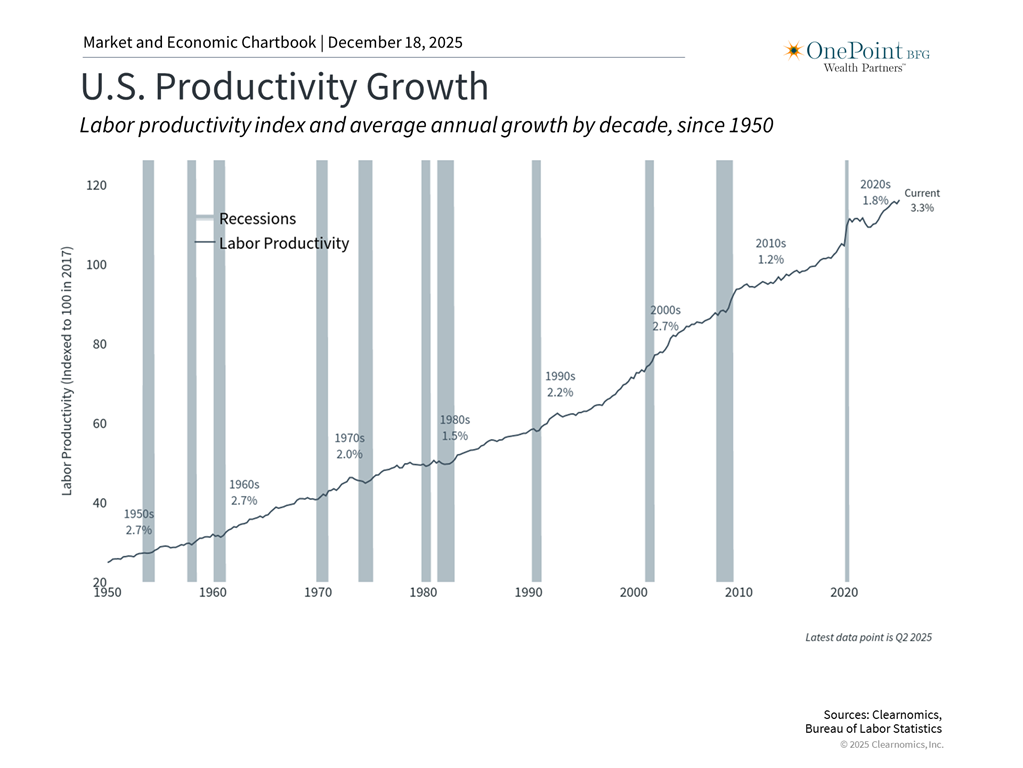
Regarding long-term economic prospects, the most crucial question may be whether recent technological advances will boost productivity. Productivity measures worker output—either quantity or quality—during a given timeframe. Historically, improved equipment, training, and education have driven productivity gains, which fuel genuine economic expansion.
As illustrated above, productivity growth averaged merely 1.2% annually during the 2010s. The promise of AI and emerging technologies is enhanced worker output. However, such improvements typically require longer timeframes than anticipated and won't necessarily benefit all workers equally. For investors, stronger productivity growth could improve profit margins, supporting both the broader economy and portfolios.
Tariff implications remain unclear
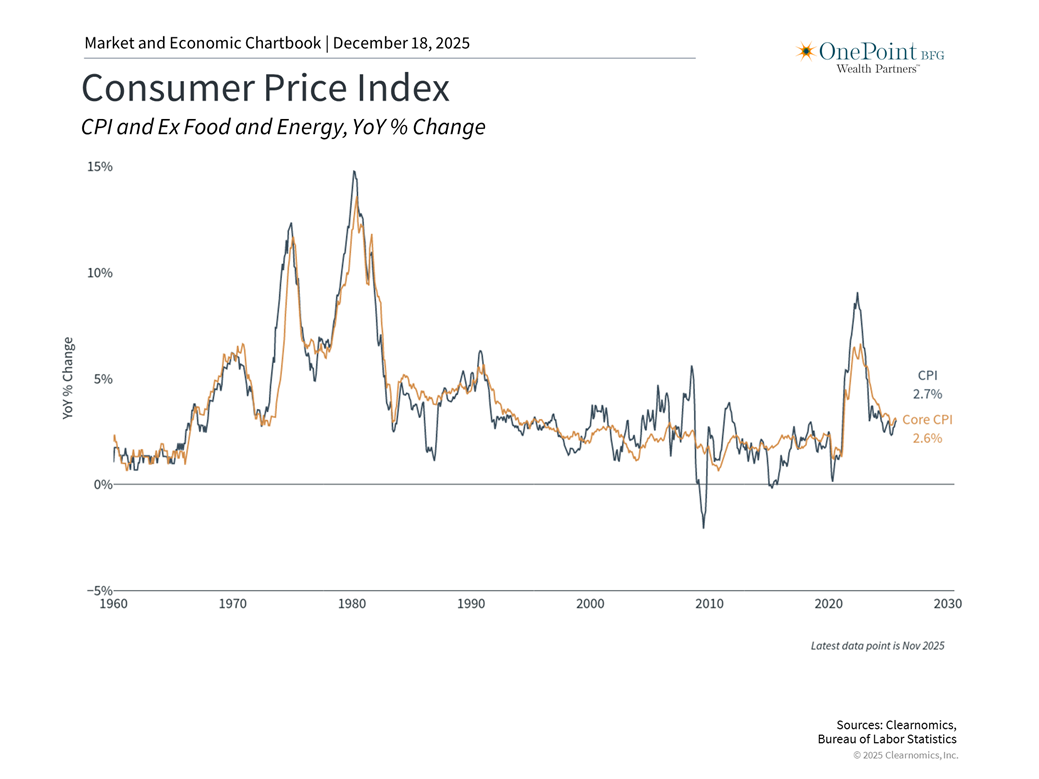
Though tariffs drove substantial market volatility throughout 2025, their economic consequences have been mixed. One persistent puzzle is how minimal immediate impact tariffs have had on inflation and growth. Despite tariff costs increasing tenfold compared to prior years' average levels, Consumer Price Index readings have risen only marginally.
Several factors may explain why tariffs haven't produced anticipated effects. First, many announced tariffs were quickly suspended or reduced. Second, numerous companies absorbed initial tariff costs by maintaining stable prices and accelerating imports before tariff implementation. Finally, robust consumer spending, fiscal support, and strong AI-sector growth helped counterbalance any negative growth impact. Additionally, the Supreme Court may rule in 2026 on the legal foundation for these tariffs' economic justification.
For long-term investors, recent developments, along with 2018's initial trade negotiations, demonstrate that tariffs represent ongoing policy instruments. Rather than viewing tariffs as fundamental shifts in global order, they're better understood as tools supporting broader policy objectives. While tariffs will persist, their influence on daily market movements may diminish.
Midterm elections and fiscal challenges will dominate 2026 discussions
Beyond trade policy changes, 2025 featured a historic 43-day government shutdown and persistent budget deficit concerns. Meanwhile, the recently enacted One Big Beautiful Bill Act (OBBBA) tax legislation has provided greater clarity for investors and taxpayers.
The new year begins with renewed Washington uncertainty as short-term funding expires at January's end. This could trigger another negotiation cycle potentially resulting in additional government shutdowns. Subsequently, some investors anticipate households and businesses benefiting from larger tax refunds due to OBBBA provisions including full expensing for research and development.
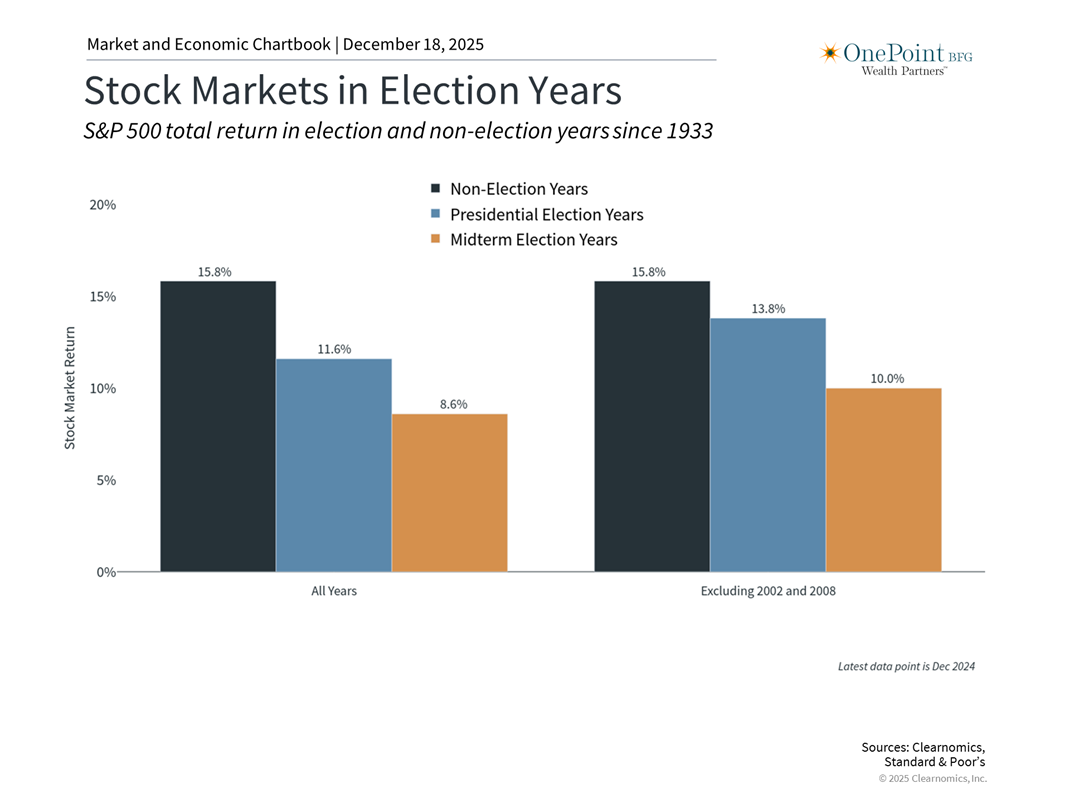
Further ahead, attention will likely shift toward midterm elections and their implications for tariffs, regulation, government spending, and related policies. Historical data shows midterm election years have delivered healthy returns, averaging 8.6% since 1933, though slightly trailing non-election and presidential election years.
Nevertheless, the mounting national debt remains a primary investor concern. The reality is that historically elevated national debt—hovering around 120% of GDP for total debt, or exceeding $36 trillion—won't be resolved soon. In fact, estimates suggest the OBBBA could add over $4 trillion to national debt over the next decade. Currently, national debt exceeds $106,000 per American.
For long-term investors, distinguishing between controllable and uncontrollable factors is essential. While national debt has posed challenges for decades, making portfolio decisions based solely on these concerns would have resulted in suboptimal positioning. Though federal debt sustainability may affect economic growth and interest rates, history demonstrates this shouldn't primarily drive portfolio construction.
Instead, what investors can control immediately is understanding key tax legislation changes and their planning implications. These include permanent lower tax rates from the Tax Cuts and Jobs Act, sustained higher estate tax exemption levels, increased SALT deduction caps, and various other provisions. Now represents an ideal opportunity to review tax strategies ensuring full advantage of these updated rules.
Federal Reserve policy will continue supporting economic stability
The Fed resumed rate cuts in September following an earlier pause. Entering 2026, monetary policy direction may become less predictable. Runaway inflation may no longer represent the primary concern as labor market weakness has gained importance. This requires policy rate adjustments rather than dramatic shifts like those implemented in 2022.
An additional complexity is Fed Chair Jerome Powell's term ending May 15, 2026, creating opportunity for new Fed leadership. The White House is expected to appoint a successor potentially favoring additional rate reductions aligned with the administration's economic agenda of lower interest rates.
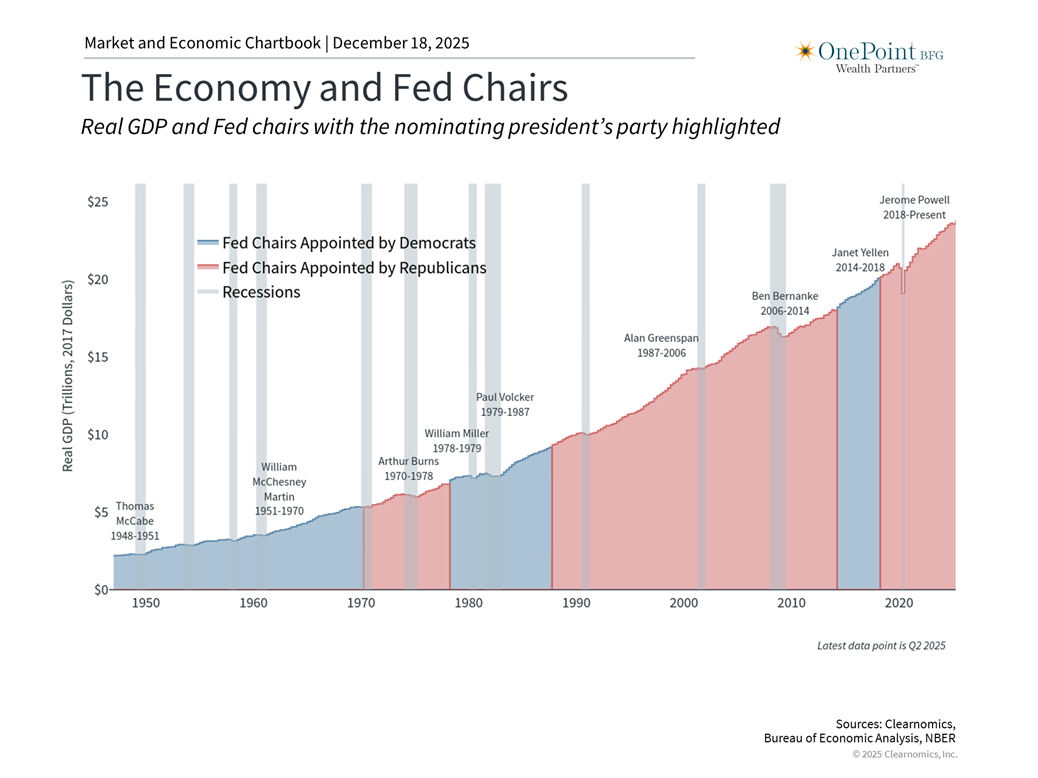
Historical data demonstrates the economy has performed well across Fed Chairs appointed by both parties. Importantly, the Fed only influences the "short end" of the yield curve—interest rates closely tied to the federal funds rate. Long-term rates depend on numerous other factors including economic growth, inflation, and productivity. Rather than tracking every Fed action and analyzing every statement, investors should focus on these longer-term trends to understand their impact on interest rates and bonds.
Keeping perspective through 2026
Entering 2026, investors confront a recurring challenge: reconciling concerns with the historical reality that markets have consistently rewarded patient, disciplined investors over extended periods. While the list of potential worries remains extensive, history reveals that genuine crises disrupting markets are vastly outnumbered by feared events that never materialize. What distinguishes successful long-term investors isn't predicting which concerns prove most significant, but maintaining balanced portfolios throughout all market cycle phases.
The bottom line? Strong market returns have been achieved, yet elevated valuations and moderating global growth suggest tempering expectations for 2026. Instead of attempting to time markets based on individual concerns, investors should prioritize maintaining diversified portfolios positioned for multiple potential outcomes.
Ready to Navigate 2026 with Confidence?

References
- https://www.census.gov/hfp/btos/data_downloads
- https://www.imf.org/en/publications/weo/issues/2025/10/14/world-economic-outlook-october-2025
DISCLAIMER
The opinions voiced in this material are for general information only and are not intended to provide specific advice or recommendations for any individual. The market and economic data is historical and is no guarantee of future results. All indices are unmanaged and may not be invested into directly. The information in this report has been prepared from data believed to be reliable, but no representation is being made as to its accuracy and completeness.
This commentary is for informational purposes only and is not meant to constitute a recommendation of any particular investment, security, portfolio of securities, transaction or investment strategy. No chart, graph, or other figure provided should be used to determine which securities to buy, sell or hold. No representation is made concerning the appropriateness of any particular investment, security, portfolio of securities, transaction or investment strategy. You should speak with your own financial professional before making any investment decisions.
Past performance is not indicative of future results. OnePoint BFG does not guarantee any specific outcome or profit. These disclosures cannot and do not list every conceivable factor that may affect the results of any investment or investment strategy. Risks will arise, and an investor must be willing and able to accept those risks, including the loss of principal.
Certain statements contained herein are statements of future expectations and other forward looking statements that are based on opinions and assumptions that involve known and unknown risks and uncertainties that would cause actual results, performance or events to differ materially from those expressed or implied in such statements.
The economic forecasts set forth in this material may not develop as predicted and there can be no guarantee that strategies promoted will be successful. The fast price swings in commodities and currencies will result in significant volatility in an investor’s holdings. International investing involves special risks such as currency fluctuation and political instability and may not be suitable for all investors. These risks are often heightened for investments in emerging markets. The fast price swings in commodities and currencies will result in significant volatility in an investor’s holdings.
Advisors associated with OnePoint BFG may be: (1) registered representatives with, and securities offered through Purshe Kaplan Sterling Investments (“PKS”), Member FINRA/SIPC, (2) registered representatives with, and securities offered through PKS, Member FINRA/SIPC and investment advisor representatives of OnePoint BFG; or (3) solely investment advisor representatives of OnePoint BFG, and not affiliated with PKS. Investment advice offered through OnePoint BFG, a registered investment advisor and separate entity from PKS.
Copyright (c) 2025 Clearnomics, Inc. All rights reserved. The information contained herein has been obtained from sources believed to be reliable, but is not necessarily complete and its accuracy cannot be guaranteed. No representation or warranty, express or implied, is made as to the fairness, accuracy, completeness, or correctness of the information and opinions contained herein. The views and the other information provided are subject to change without notice. All reports posted on or via www.clearnomics.com or any affiliated websites, applications, or services are issued without regard to the specific investment objectives, financial situation, or particular needs of any specific recipient and are not to be construed as a solicitation or an offer to buy or sell any securities or related financial instruments. Past performance is not necessarily a guide to future results. Company fundamentals and earnings may be mentioned occasionally, but should not be construed as a recommendation to buy, sell, or hold the company's stock. Predictions, forecasts, and estimates for any and all markets should not be construed as recommendations to buy, sell, or hold any security--including mutual funds, futures contracts, and exchange traded funds, or any similar instruments. The text, images, and other materials contained or displayed in this report are proprietary to Clearnomics, Inc. and constitute valuable intellectual property. All unauthorized reproduction or other use of material from Clearnomics, Inc. shall be deemed willful infringement(s) of this copyright and other proprietary and intellectual property rights, including but not limited to, rights of privacy. Clearnomics, Inc. expressly reserves all rights in connection with its intellectual property, including without limitation the right to block the transfer of its products and services and/or to track usage thereof, through electronic tracking technology, and all other lawful means, now known or hereafter devised. Clearnomics, Inc. reserves the right, without further notice, to pursue to the fullest extent allowed by the law any and all criminal and civil remedies for the violation of its rights.
OP 25-0462